

The transformation of the power system is creating new opportunities for industrial companies.
The increasing integration of renewable energy sources, together with the need to maintain grid stability, has led to the development of mechanisms that enable electricity consumers to play an active role in balancing the power system.
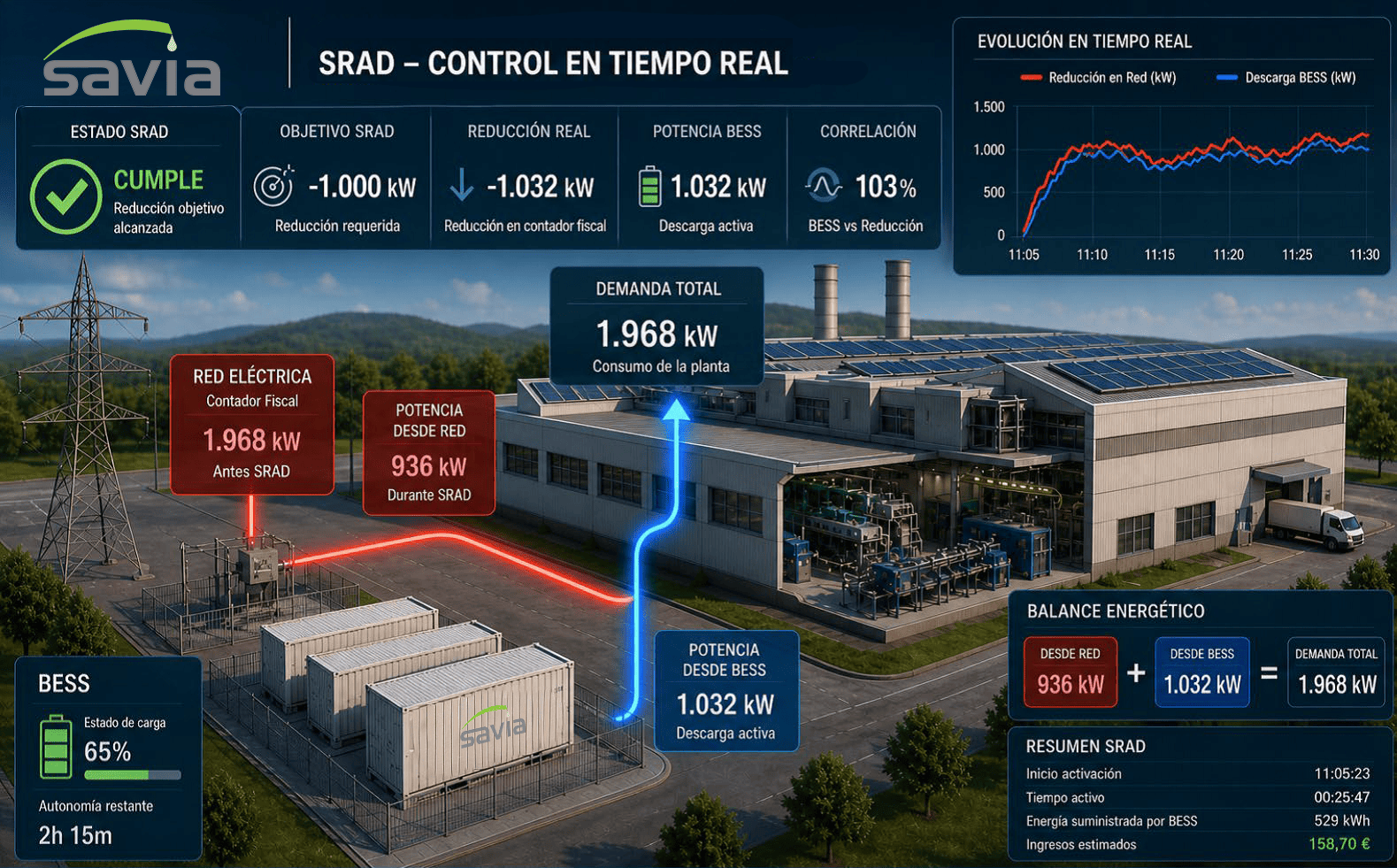
One of these mechanisms is the Active Demand Response Service (SRAD), which allows eligible facilities to receive financial compensation for being ready to temporarily reduce their electricity consumption whenever requested by the transmission system operator.
Renewable energy generation, particularly from solar and wind power, depends on variable weather conditions. As a result, the electricity system requires flexible resources capable of responding rapidly to changes in generation or demand.
In this context, the ability of industrial facilities to adjust their electricity consumption has become a strategic asset for ensuring the stability, reliability, and security of the power supply.
The Active Demand Response Service (SRAD) is a regulated mechanism through which eligible electricity consumers commit to reducing their power demand during specific periods when requested by the Spanish transmission system operator, Red Eléctrica. In return, participants receive financial compensation both for their availability and for any demand reduction activations carried out.
Participation in this service is governed by Spanish regulations and forms part of the ongoing evolution of European electricity markets towards more flexible and efficient energy systems.
Battery Energy Storage Systems (BESS) are playing an increasingly important role in this evolving landscape.
Beyond storing electricity for later use, these systems enable rapid responses to grid requirements, allowing companies to participate in flexibility programs without significantly affecting their production processes. Their integration with advanced monitoring and control platforms enables intelligent energy management, optimizing both energy consumption and responsiveness to electricity market events.
Recent capacity auctions linked to demand response services have shown significant growth in both the amount of awarded capacity and the number of participating organizations.
This trend reflects the increasing interest among industrial companies in taking advantage of the opportunities offered by emerging energy markets, combining efficiency, sustainability, and profitability.
Digitalization, real-time monitoring, and energy storage are transforming the way organizations manage their energy resources. Beyond traditional energy savings, flexibility is emerging as one of the most valuable assets for the future, enabling companies to actively contribute to the energy transition while unlocking additional value from their existing facilities.
Energy is no longer viewed solely as an operating cost. Increasingly, organizations are recognizing it as a strategic resource capable of creating new business opportunities and strengthening their long-term competitiveness.